i contributed today's podcast to the excellent 365 days of astronomy project! go have a listen to carl sagan and the interstellar adventures of the voyager missions, or read the trascript below! (i like that they published the trasnscipt in the same lowercase form that i submitted it!)
TRANSCRIPT:
hello everyone! i'm amanda bauer, a postdoctoral research fellow in astronomy at the university of Nottingham in england. today is december 20th, 2009, the 13th anniversary of astronomer carl sagan's death.
my first memory of carl sagan is from my first year as an undergraduate at the university of cincinnati. i was majoring in french and taking the university's only undergraduate astronomy course as my one science requirement. my professor played a few episodes of the COSMOS mini-series in class. eventhough this tv series was written in the late 1970s by carl sagan, ann druyan, and steven soter, the episodes made a memorable impression on me! i wondered why i had never seen anything explaining the universe so simply and understandably before. remember, this was back before youtube allowed us immediate access to all the good, and the bad, video information humans had to offer each other.
i'd like to mention an online video project i've been involved with at the university of nottingham, called sixty symbols. filmmaker brady haran, has worked in collaboration with scientists here to create 5-10 minute youtube videos about the various funny little letters and squiggles used by physicists and astronomers to explain concepts about the physical universe. you can find videos at http://www.sixtysymbols.com/.
so a couple months after first being exposed to the COSMOS tv series, the movie contact was released, proving to be a huge inspiration in my thoughts about the future. in fact, just a few weeks later, i decided to change my course and switch my college major to physics, dedicated to the idea of studying astronomy as much as i could! i only found out many years later that the movie contact was actually based on a novel by carl sagan!
My student days are long gone now, but I regularly hear colleagues claim that he was a huge influence in their decision to study astrophysics.
In addition to communicating astronomy and critical thinking to the public, i admire carl sagan because he actively applied science to public welfare, he was a skeptic who fought against pseudo science, he wrote about the virtues of cannabis under the pseuonymn "Mr. X," he won a pulitzer prize for his book "The Dragons of Eden," and he contributed hugely to the scientific discoveries about our solar system made by space probes sent out in the 1970s and 80s.
One project in particular seems to have left a lasting impression on human beings: the twin voyager missions. in 1977, NASA launched the voyager 1 and voyager 2 spacecraft, which were intended for 4 year missions to explore the outer regions of our solar system! Both voyagers have completely exceeded all expectations for their missions and continue to explore the the farthest reaches of our solar system!
traveling aboard each voyager spacecraft is an ambitious time capsule, intended to communicate the story of humity to any being that might find them! referred to as a 'golden record,' each time capsule is a phonographic 12-inch gold-plated copper disk. carl sagan chaired the committee that determined what message should be sent out into space on the voyager spacecrafts to portray the uniqueness of life on earth. imagine how exciting it must have felt to lead the group of people who designed, created, and found what images, symbols, and sounds to use to explain to a potential distant unknown creature... who we are, where we are, and *what* we are!
in the end, the team included 115 images, nature sounds of earth, 90 minutes of music, and spoken greetings from 55 different languages, among other things.
voyager 1 remains the most distant human made object we have sent to space, having passed the distance of pioneer 10 on february 17, 1998. As of November 20th, 2009, voyager 1 is over 111 times the farther from the sun than the earth! that's 111 astronomical units. thats more than 16,000 million kilometers and about 4 times as far from the sun as pluto's orbit!
these little chunks of synthetic machinery have been traveling away from earth for 32 years, and continue to travel outward, well beyond the confines of our solar system, making them the first spacecraft in interstellar space! the nearest star to our sun, Proxima Centauri, is 4.2 light-years away. at its current speed (about 38,000 miles per hour!), it will take 56,000 years for voyager 1 to reach the next star!!
it will have lost power, and all interactive capabilities, long before that time. NASA scientists estimate that in 2025, the spacecraft will lose electrical power, because the Radio-isotope Thermo-electric Generators will run out of their plutonium fuel sources, due to natural radioactive decay. The voyagers will lose power well before they reach another star system.
but the good news is that the 'golden record' has a shelf life of 1 billion years!
it's actually impossible to predict the exact trajectory of the voyager spacecraft as they will get gravitationally bumped along their journeys. but they could pass nearby several thousands of stars during the next billion years, while the golden records will still be playable. and they will possibly pass out into intergalactic space! voyager 1 is traveling 35 degrees out of the ecliptic plane to the north. Voyager 2 is traveling 48 degrees out of the ecliptic plane to the south and will pass 4.3 light years (25 trillion miles) from Sirius, the brightest star in earth's night sky.
it's amazing how far these spacecraft will travel away from earth. and it reminds me just how incredible it is that the light from the distant galaxies that i study everyday, has traveled for over 10 billions years, across spacetime, without running into any obstacles, only to crash into the primary mirror of a telescope we happen to have sitting on the surface of earth. amazing!
relatively early on in the voyager missions, the voyager 1 spacecraft turned around to take an image of the earth on february 14, 1990. in that photo, earth appeared as a tiny dot, encompassing one single pixel of that entire image. carl sagan was inspired to call our home planet the "pale blue dot" based on that image, and i'd like to leave you with some of his words. thank you for listening:
"Consider again that dot. That's here. That's home. That's us. On it, everyone you love, everyone you know, everyone you ever heard of, every human being who ever was, lived out their lives. It has been said that astronomy is a humbling and character-building experience. There is perhaps no better demonstration of the folly of human conceits than this distant image of our tiny world. To me, it underscores our responsibility to deal more kindly with one another and to preserve and cherish that pale blue dot, the only home we've ever known."
Showing posts with label carl sagan. Show all posts
Showing posts with label carl sagan. Show all posts
Sunday, December 20, 2009
Monday, November 9, 2009
carl sagan on childhood
in honor of his birthday, i'd like to share a quote from carl sagan:
“As soon as I was old enough, my parents gave me my first library card. I think the library was on 85th Street, an alien land. Immediately, I asked the librarian for something on stars. She returned with a picture book displaying portraits of men and women with names like Clark Gable and Jean Harlow. I complained, and for some reason then obscure to me, she smiled and found another book — the right kind of book. I opened it breathlessly and read until I found it. The book said something astonishing, a very big thought. It said that the stars were suns, only very far away. The Sun was a star, but close up.”
from “the backbone of night,” cosmos.
more quality quotes at skeptic.
“As soon as I was old enough, my parents gave me my first library card. I think the library was on 85th Street, an alien land. Immediately, I asked the librarian for something on stars. She returned with a picture book displaying portraits of men and women with names like Clark Gable and Jean Harlow. I complained, and for some reason then obscure to me, she smiled and found another book — the right kind of book. I opened it breathlessly and read until I found it. The book said something astonishing, a very big thought. It said that the stars were suns, only very far away. The Sun was a star, but close up.”
from “the backbone of night,” cosmos.
more quality quotes at skeptic.
Saturday, November 7, 2009
carl sagan day
today is carl sagan day, with a celebration being held at broward college in southern florida for what would have been carl's 75th birthday.
carl sagan was an astronomer, but most well-known to the public as an incredible science communicator. i meet professional astronomers all the time who claim him to be a major influence in their decision to go into science, including myself.
he has written some very influential books, shared amazing perspective as to our place in the universe on our pale blue dot, he and partner ann druyan created the memorable cosmos tv series, and a recent youtube video featuring carl sagan, a glorious dawn, has proven to be very popular!
here is carl with the dalai lama in 1991.

i'm actually working on another piece about carl sagan, and i'd like to hear your thoughts. what influence has he had for you, if any? what memories do you associate with him? if you are a young person, do you know who he is? how did you hear about him?
carl sagan was an astronomer, but most well-known to the public as an incredible science communicator. i meet professional astronomers all the time who claim him to be a major influence in their decision to go into science, including myself.
he has written some very influential books, shared amazing perspective as to our place in the universe on our pale blue dot, he and partner ann druyan created the memorable cosmos tv series, and a recent youtube video featuring carl sagan, a glorious dawn, has proven to be very popular!
here is carl with the dalai lama in 1991.

i'm actually working on another piece about carl sagan, and i'd like to hear your thoughts. what influence has he had for you, if any? what memories do you associate with him? if you are a young person, do you know who he is? how did you hear about him?
Sunday, October 4, 2009
carl sagan rocks out
thanks to all who informed me of this video. i love me some carl sagan, and this video shows his message in a way i've never seen before! ;)
Sunday, March 22, 2009
carl sagan - cosmos series
those of you living in the USA can now view the entire COSMOS series online at hulu. COSMOS was a fantastic astronomy tv series produced by carl sagan and ann druyan in the 1980s. the animations look a little primative compared to today's standards, but the science is still largely applicable and the imagination demonstrated is exquisite!
here's the introduction to the series:
i hope i can view hulu videos from outside the US soon!!!! good thing i have the whole COSMOS series on DVD ;)
hat tip to the bad astronomer.
here's the introduction to the series:
i hope i can view hulu videos from outside the US soon!!!! good thing i have the whole COSMOS series on DVD ;)
hat tip to the bad astronomer.
Monday, February 11, 2008

Monday, December 31, 2007
sagan's cosmos of TV!
carl sagan has remained a very positive influence in my life and has written amazingly inspirational prose about the human perspecive and our place in the universe.
sagan and ann druyan produced a TV series called COSMOS in the 1980's, and i'm happy to share that the Discovery Channel will be airing it in its entirety starting january 8th!!
the COSMOS series doesnt have the super high-tech animations that are shown in the universe series on the history channel, because it was created in the 80's. but its information is still up to date, and i like the amount that it left to be filled in by my imagination.... and the passion and wonder portrayed in this series is unrivaled in anything i've seen since.
you can see little snippets from the COSMOS series on evolution and the timeframe for human existence in the universe.
here's the beautiful introduction to the TV series:
enjoy!
sagan and ann druyan produced a TV series called COSMOS in the 1980's, and i'm happy to share that the Discovery Channel will be airing it in its entirety starting january 8th!!
the COSMOS series doesnt have the super high-tech animations that are shown in the universe series on the history channel, because it was created in the 80's. but its information is still up to date, and i like the amount that it left to be filled in by my imagination.... and the passion and wonder portrayed in this series is unrivaled in anything i've seen since.
you can see little snippets from the COSMOS series on evolution and the timeframe for human existence in the universe.
here's the beautiful introduction to the TV series:
enjoy!
Thursday, September 6, 2007
happy 30th birthday voyagers!
in 1977 (before i was born!!), NASA scientists launched the voyager spacecrafts, which were intended for 5 year missions of solar system exploration! they each succeeded well beyond just taking pictures of jupiter and saturn! voyager 1 passed pioneer 10 on february 17, 1998 to become the most distant synthetic object in space!!! both voyagers continue to travel out in space, well beyond the confines of our solar system.

as of august 10, 2007, voyager 1 is 15.4 billion km (9,594,000,000 miles) away from earth! that's about 100 AU, or 100 times as far from us as we are from the sun. voyager 1 travels away from the solar system at a speed of 3.6 AU per year, which is 17 kilometers per second or 38,000 miles per hour!!!
one of my long-time heroes, carl sagan, was integrally involved with the planning of the voyager missions. he had the brilliant idea to turn the voyager 1 spacecraft around just before it left the confines of our solar system to take an image o the earth on february 14, 1990. earth encompassed one single pixel of that entire image. if you've never read sagan's reaction to this phenomenon, please read this!!

carl sagan also chaired the committee that determined what message should be sent out into space on the voyager spacecrafts to portray the uniqueness of life on earth. they included 115 images, nature sounds of earth, 90 minutes of music and spoken greetings from 55 different languages among other things. the message is carried by a 12-inch gold-plated copper disk phonograph "golden record"!!

for a bit of perspective... while it is exciting to think about the huge distance traveled by the voyager space crafts over the last 30 years... the nearest star to our sun is 4.2 light-years away. that is roughly 200,000 AU. at its current speed of 3.6 AU per year, it will take 56,000 years for voyager 1 to reach the next star!! let's hope that some other civilizations in the universe started sending machines out into space a long long time ago and hopefully sent them off at much much faster speeds!!

as of august 10, 2007, voyager 1 is 15.4 billion km (9,594,000,000 miles) away from earth! that's about 100 AU, or 100 times as far from us as we are from the sun. voyager 1 travels away from the solar system at a speed of 3.6 AU per year, which is 17 kilometers per second or 38,000 miles per hour!!!
one of my long-time heroes, carl sagan, was integrally involved with the planning of the voyager missions. he had the brilliant idea to turn the voyager 1 spacecraft around just before it left the confines of our solar system to take an image o the earth on february 14, 1990. earth encompassed one single pixel of that entire image. if you've never read sagan's reaction to this phenomenon, please read this!!

carl sagan also chaired the committee that determined what message should be sent out into space on the voyager spacecrafts to portray the uniqueness of life on earth. they included 115 images, nature sounds of earth, 90 minutes of music and spoken greetings from 55 different languages among other things. the message is carried by a 12-inch gold-plated copper disk phonograph "golden record"!!

for a bit of perspective... while it is exciting to think about the huge distance traveled by the voyager space crafts over the last 30 years... the nearest star to our sun is 4.2 light-years away. that is roughly 200,000 AU. at its current speed of 3.6 AU per year, it will take 56,000 years for voyager 1 to reach the next star!! let's hope that some other civilizations in the universe started sending machines out into space a long long time ago and hopefully sent them off at much much faster speeds!!
Tuesday, June 12, 2007
mr wizard
our beloved mr. wizard (don herbert) died today at the age of 89. when i was young, i absolutely loved to watch mr wizard's world on nickelodeon... a true youngin of the 80's i was! i enjoyed that fact that he had kids on the show to help perform different scientific experiments. he had a great way of making science accessible and not being condescending while helping the kids formulate theories to figure out what was really happening! he made me want to figure out how things worked and probably introduced me to skepticism, although i've never recognized that until thinking about it now. i became skeptical when people would try to trick me because i suspected there was some explanation that i should be able to figure out. i also had a really cool magicians kit growing up so i was able to trick other people while understanding the secrets (although my grandpa always got me with his "i have 11 fingers" trick!).
usually mr wizard would introduce an experiment by demonstration... always leaving me and the kid on the show amazed, saying "wow"! some things seemed like magic at first, but 10 minutes later i understood the simple underlying scientific truth (or at least i knew that a scientific explanation existed, even if i didnt understand it!!). i've looked around the video internet world, but i havent found any clips of old experiments from the show. anyone know where i can look to find some?
i've typically considered carl sagan to be the major influence in my decision to study astronomy, but i think mr wizard definitely started me on my journey of questioning and logically understanding the world around me.
usually mr wizard would introduce an experiment by demonstration... always leaving me and the kid on the show amazed, saying "wow"! some things seemed like magic at first, but 10 minutes later i understood the simple underlying scientific truth (or at least i knew that a scientific explanation existed, even if i didnt understand it!!). i've looked around the video internet world, but i havent found any clips of old experiments from the show. anyone know where i can look to find some?
i've typically considered carl sagan to be the major influence in my decision to study astronomy, but i think mr wizard definitely started me on my journey of questioning and logically understanding the world around me.
Friday, March 2, 2007
every human that has ever lived
i've discussed before the huge influence carl sagan has had on my perspective of the universe. i wanted to share a video representation of an excerpt (shown below) from his fantastic book, Pale Blue Dot.

"We succeeded in taking that picture [from deep space], and, if you look at it, you see a dot. That's here. That's home. That's us. On it, everyone you ever heard of, every human being who ever lived, lived out their lives. The aggregate of all our joys and sufferings, thousands of confident religions, ideologies and economic doctrines, every hunter and forager, every hero and coward, every creator and destroyer of civilizations, every king and peasant, every young couple in love, every hopeful child, every mother and father, every inventor and explorer, every teacher of morals, every corrupt politician, every superstar, every supreme leader, every saint and sinner in the history of our species, lived there on a mote of dust, suspended in a sunbeam.
The earth is a very small stage in a vast cosmic arena. Think of the rivers of blood spilled by all those generals and emperors so that in glory and in triumph they could become the momentary masters of a fraction of a dot. Think of the endless cruelties visited by the inhabitants of one corner of the dot on scarcely distinguishable inhabitants of some other corner of the dot. How frequent their misunderstandings, how eager they are to kill one another, how fervent their hatreds. Our posturings, our imagined self-importance, the delusion that we have some privileged position in the universe, are challenged by this point of pale light.
Our planet is a lonely speck in the great enveloping cosmic dark. In our obscurity -- in all this vastness -- there is no hint that help will come from elsewhere to save us from ourselves. It is up to us. It's been said that astronomy is a humbling, and I might add, a character-building experience. To my mind, there is perhaps no better demonstration of the folly of human conceits than this distant image of our tiny world. To me, it underscores our responsibility to deal more kindly and compassionately with one another and to preserve and cherish that pale blue dot, the only home we've ever known."
gives me chills every time i read it!
"We succeeded in taking that picture [from deep space], and, if you look at it, you see a dot. That's here. That's home. That's us. On it, everyone you ever heard of, every human being who ever lived, lived out their lives. The aggregate of all our joys and sufferings, thousands of confident religions, ideologies and economic doctrines, every hunter and forager, every hero and coward, every creator and destroyer of civilizations, every king and peasant, every young couple in love, every hopeful child, every mother and father, every inventor and explorer, every teacher of morals, every corrupt politician, every superstar, every supreme leader, every saint and sinner in the history of our species, lived there on a mote of dust, suspended in a sunbeam.
The earth is a very small stage in a vast cosmic arena. Think of the rivers of blood spilled by all those generals and emperors so that in glory and in triumph they could become the momentary masters of a fraction of a dot. Think of the endless cruelties visited by the inhabitants of one corner of the dot on scarcely distinguishable inhabitants of some other corner of the dot. How frequent their misunderstandings, how eager they are to kill one another, how fervent their hatreds. Our posturings, our imagined self-importance, the delusion that we have some privileged position in the universe, are challenged by this point of pale light.
Our planet is a lonely speck in the great enveloping cosmic dark. In our obscurity -- in all this vastness -- there is no hint that help will come from elsewhere to save us from ourselves. It is up to us. It's been said that astronomy is a humbling, and I might add, a character-building experience. To my mind, there is perhaps no better demonstration of the folly of human conceits than this distant image of our tiny world. To me, it underscores our responsibility to deal more kindly and compassionately with one another and to preserve and cherish that pale blue dot, the only home we've ever known."
gives me chills every time i read it!
Monday, February 12, 2007
darwin
happy darwin day!! not only is today the birthday of my lovely older sister... it's the day charles darwin was born, 198 years ago! he also published "On The Origin of Species" on this day 148 years ago.
"The objective of Darwin Day Celebration is to encourage existing institutions worldwide, such as municipalities, public and private schools, colleges and universities, libraries, museums, churches, private organizations and individuals to celebrate Science and Humanity every year, on, or near, February 12."
so.... here's a video, by the eloquent carl sagan, explaining the theory of evolution (7:55)
"The objective of Darwin Day Celebration is to encourage existing institutions worldwide, such as municipalities, public and private schools, colleges and universities, libraries, museums, churches, private organizations and individuals to celebrate Science and Humanity every year, on, or near, February 12."
so.... here's a video, by the eloquent carl sagan, explaining the theory of evolution (7:55)
Wednesday, December 20, 2006
pale blue dot
 today marks the 10th anniversary of the death of carl sagan. Since he has been a hero of mine for such a long time, i wanted to contribute something to his memory before catching a plane this afternoon.
my first memory of carl sagan is from my freshman year in college. i was majoring in french and taking the university's only undergrad astronomy class as my science requirement. the eccentric professor played a few episodes of the COSMOS mini-series, produced in the 80's by carl sagan and ann druyan. i really enjoyed them and wondered why i had never seen anything so easily understandable and inspiring before. a couple months later, the movie contact was released... proving to be a huge inspiration in my thoughts about the future. i only found out many years later that the movie was actually based on a novel by carl sagan and ann druyan!
later that spring, i decided to change my college major into some sort of science because my curiosities about the world and the universe felt unsatisfied without the observation, investigation and critical thought demanded by science. now armed with hindsight recognition, i thank carl for inspiring the direction of my pursuit.
not only were carl's scientific discoveries about our solar system and contributions to the early space program substantial, he also applied his critical thinking skills and scientific perspective to socially relevant issues. he successfully applied science to public welfare. he managed to communicate his ideas publicly in a kind, uplifting and un-condescending way... which is a diffcult task and rarely achieved by leading experts, in my opinion. i admire this quality in carl.
many years later now... i'm almost finished with my astrophysics PhD and again deciding what i want to do with the rest of my life. i find myself thinking a lot about carl's life as an astronomer and how he became such a strong public influence by passionately speaking about the things he'd learned from pondering the universe. he had such an amazing way of providing perspective for people who dont think about the universe in terms of "billions and billions" on a regular basis. He sparked the imaginations of people all over the world to contemplate the natural wonders of our universe... showing clearly how we need not invoke supernatural phenomenon to explain or feel the awe, joy, wonder, amazement... humbleness that strikes whenever we look at any one of the beautiful images provided by the hubble space telescope or others....
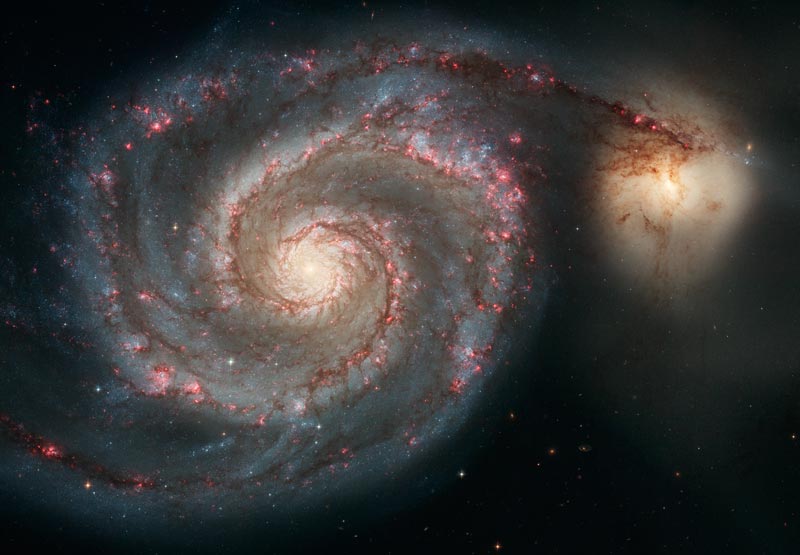
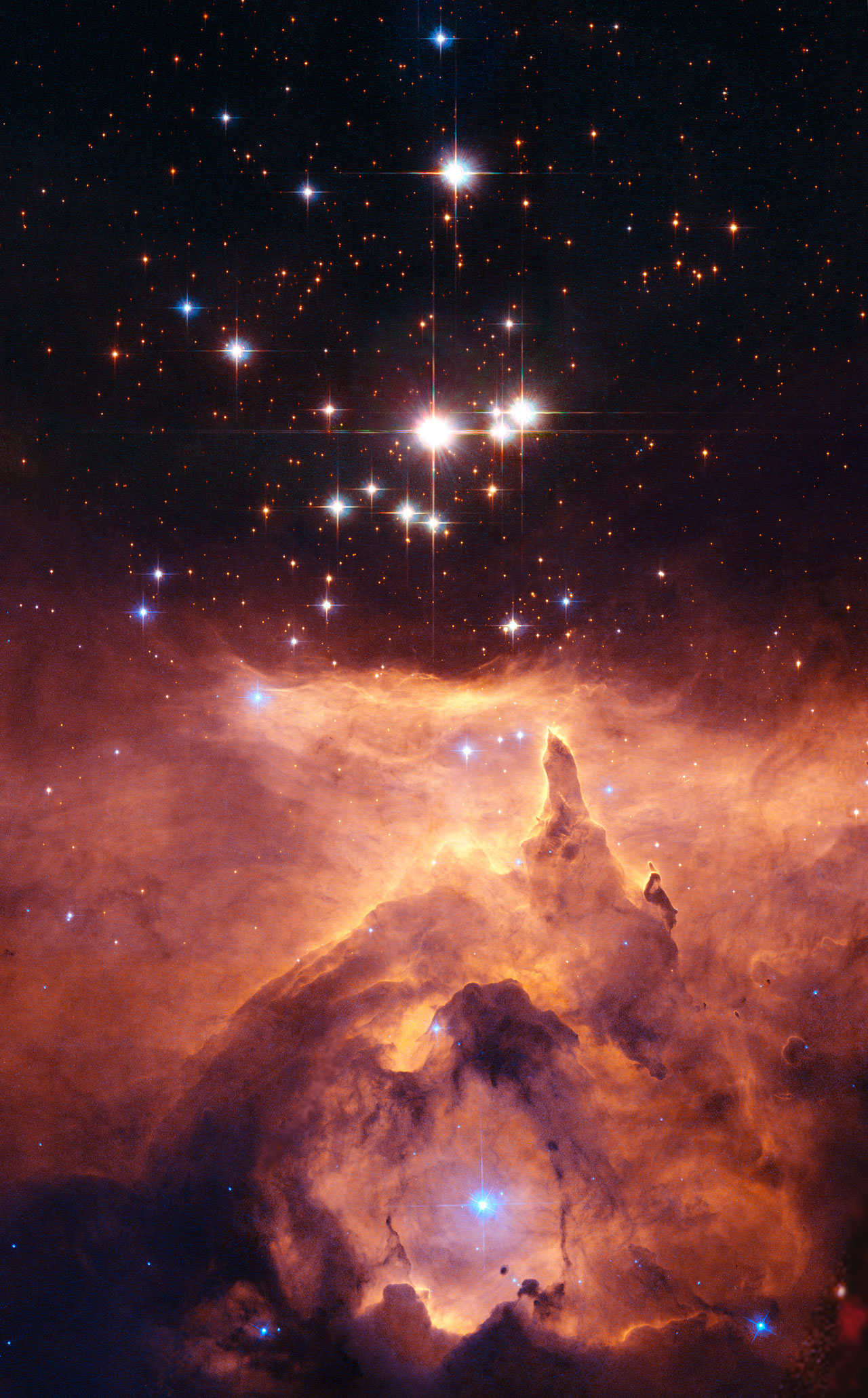
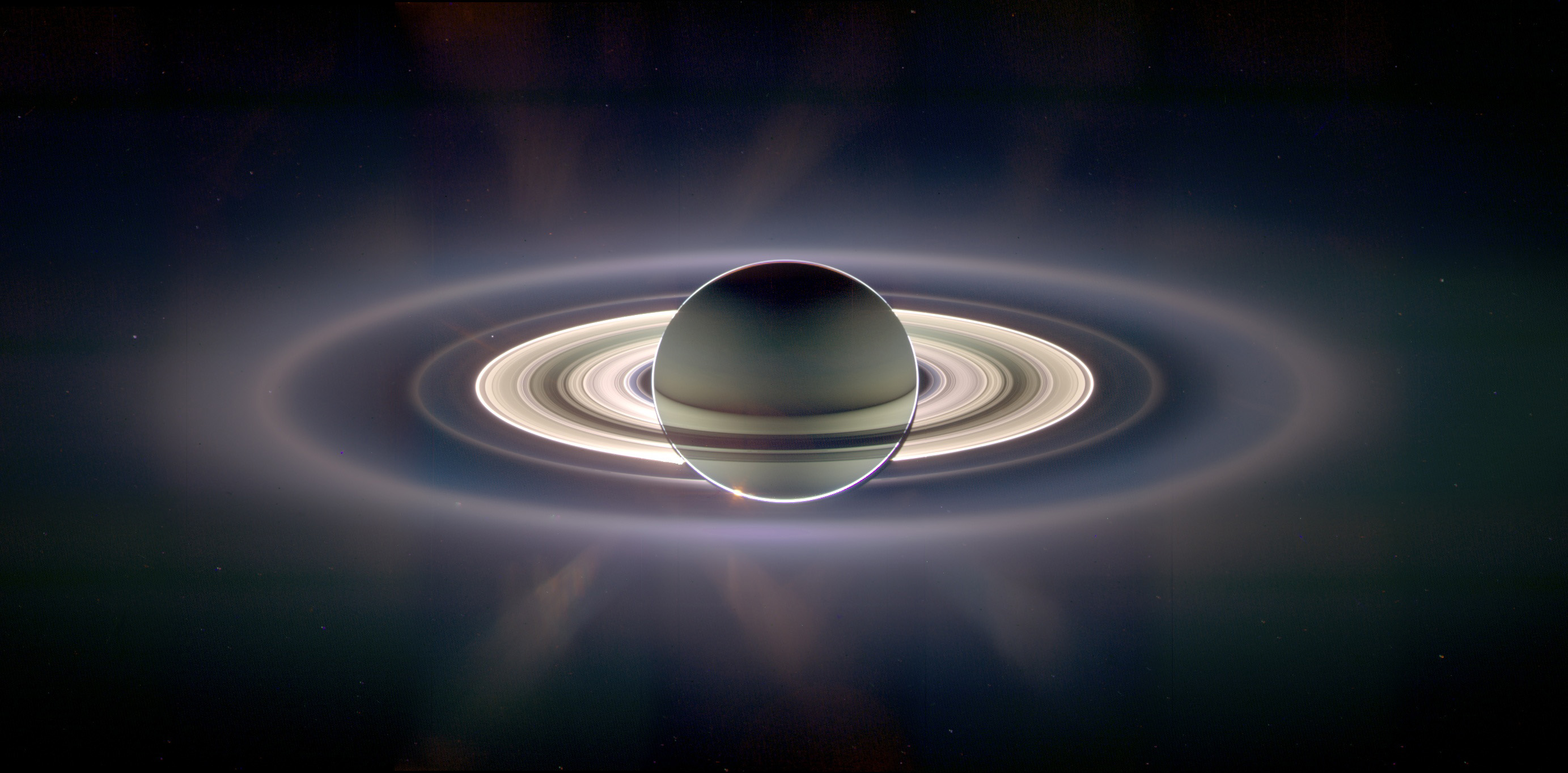
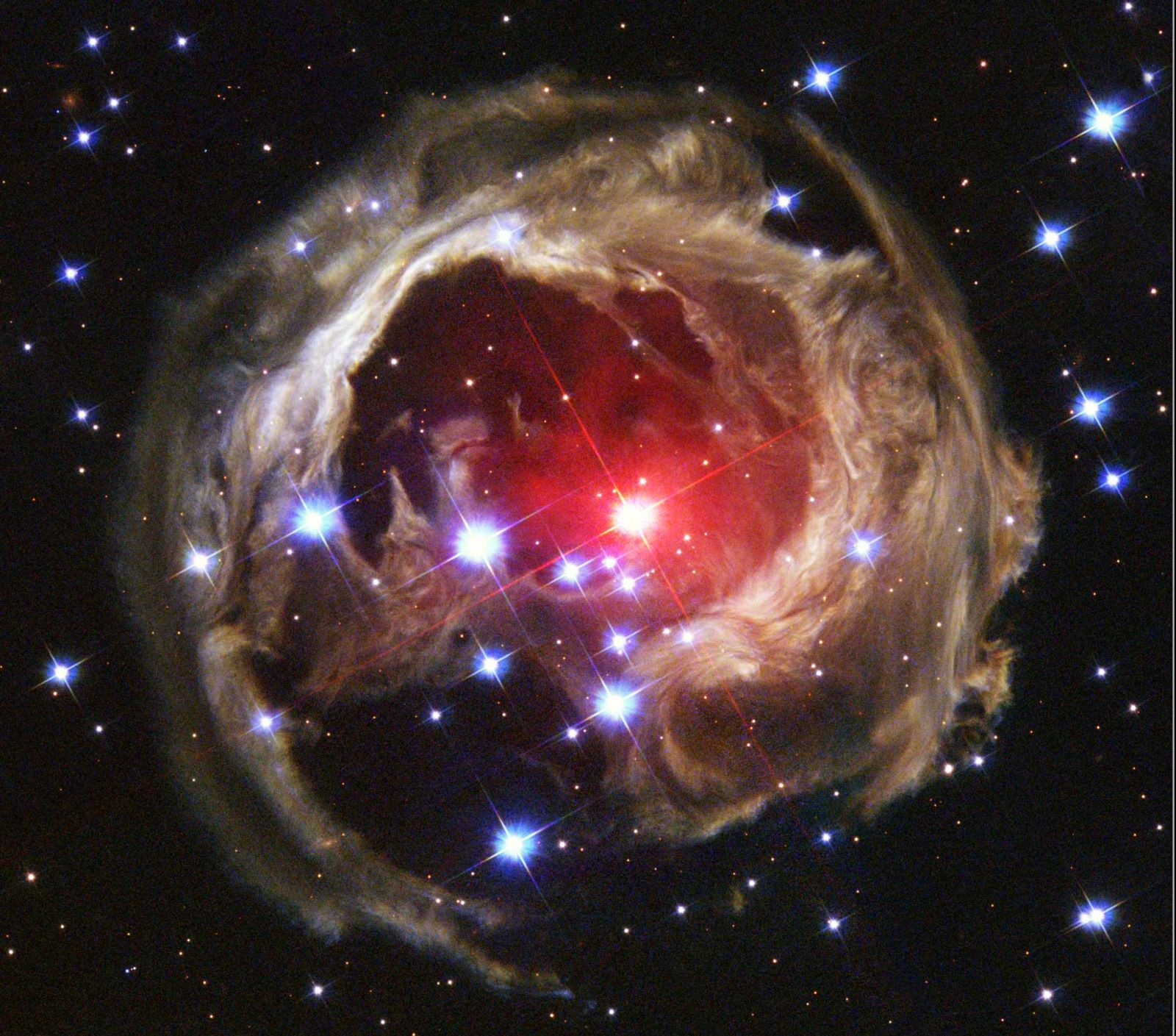
i hope to share with those around me and those i meet, some of the inspiration i've discovered from pondering the universe... (as a career.. haha!!) people often exclaim when i meet them "i've never met a real astronomer before!" then they usually ask me a question or two about something they've "always wondered" (and many times i even get the "you know, you really remind me of jody foster in contact. do you search for aliens, too?"). i love these conversations because i can have them with people from every country! every human considers these questions and uniquely discovers knowledge and perspective necessary for appreciating our extraordinary and finite existences. everyone seeks to explore inward and outward from the "pale blue dot" that is our shared home... the earth.

i also wanted to share with you the beautiful essay written today by carl's collaborator and life partner of 20 years, ann dryuan, ten times around the sun without carl.
Subscribe to:
Posts (Atom)


